Turning silent clicks into a notification system people trust
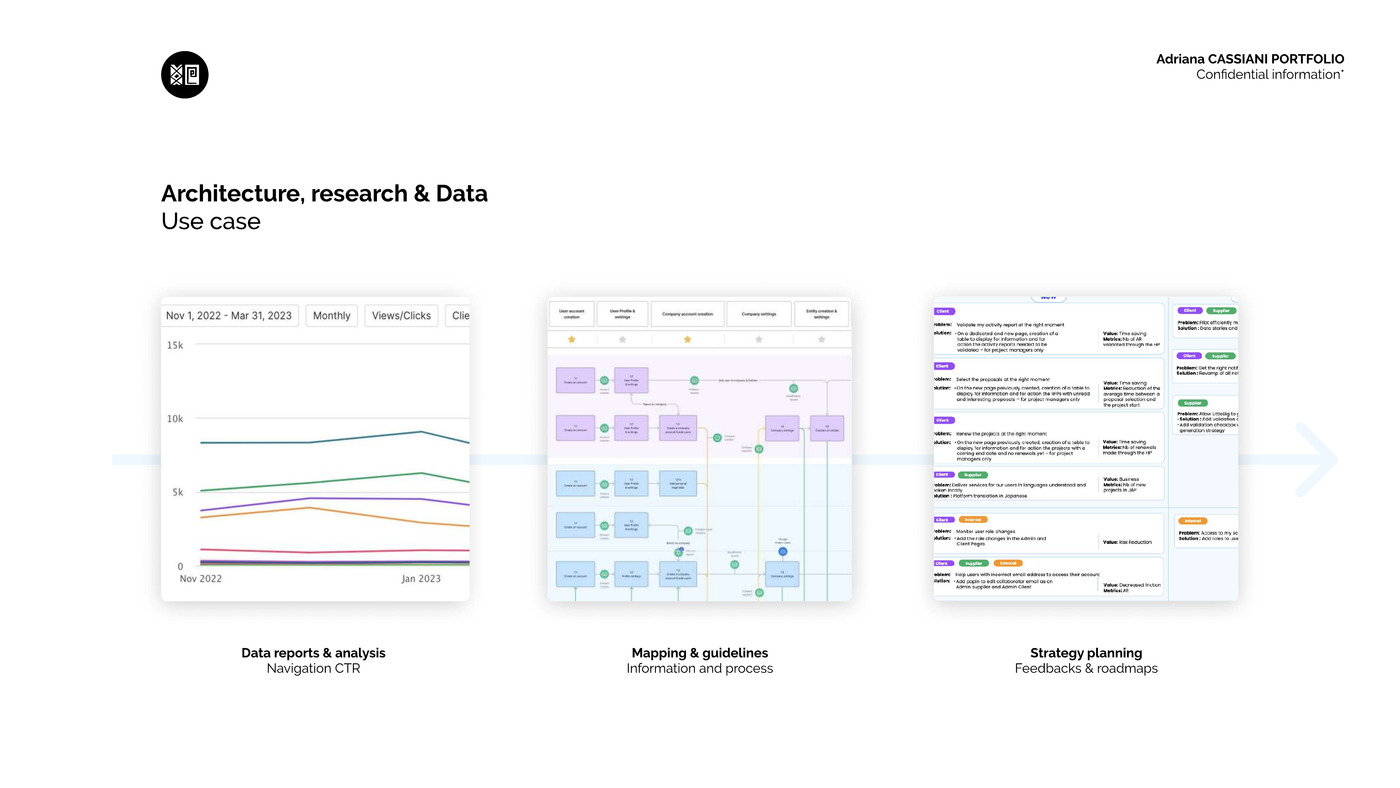
Replace design hypotheses with real behavioral data, and use that data to fix a navigation that didn't match how users actually worked.
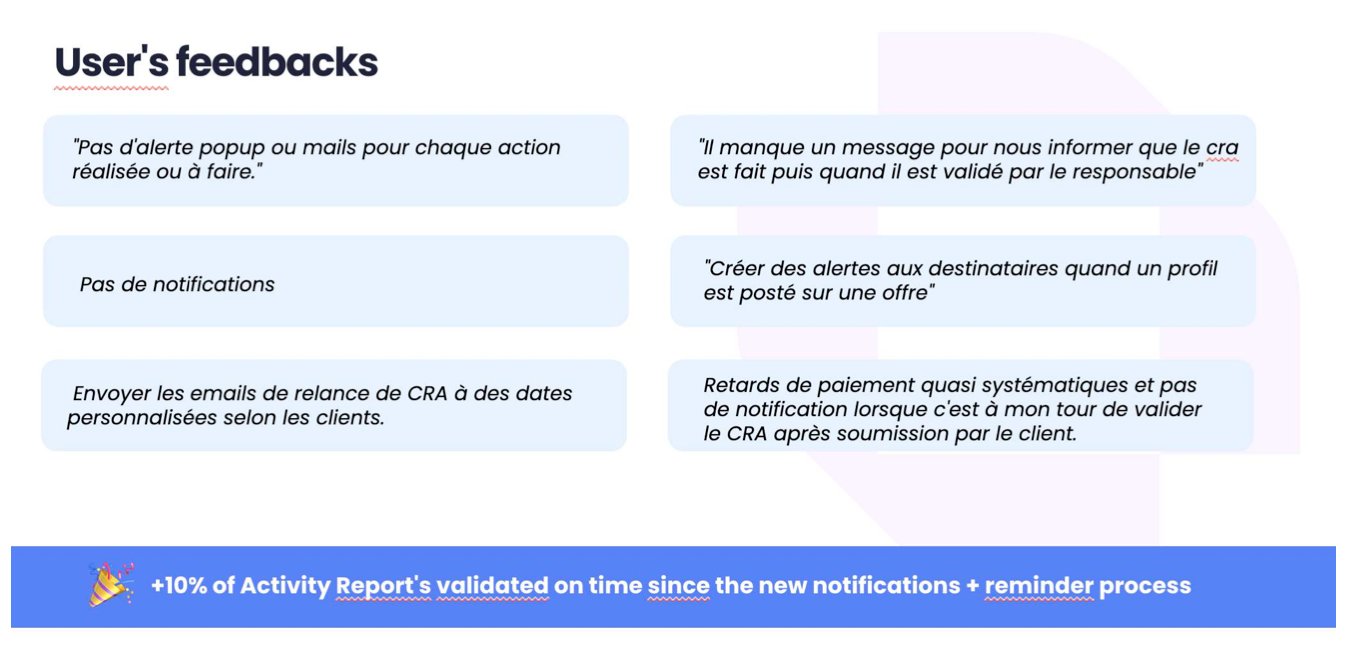
A rebuilt notification system and action-first homepage that lifted on-time activity report validation by 10%.
Context
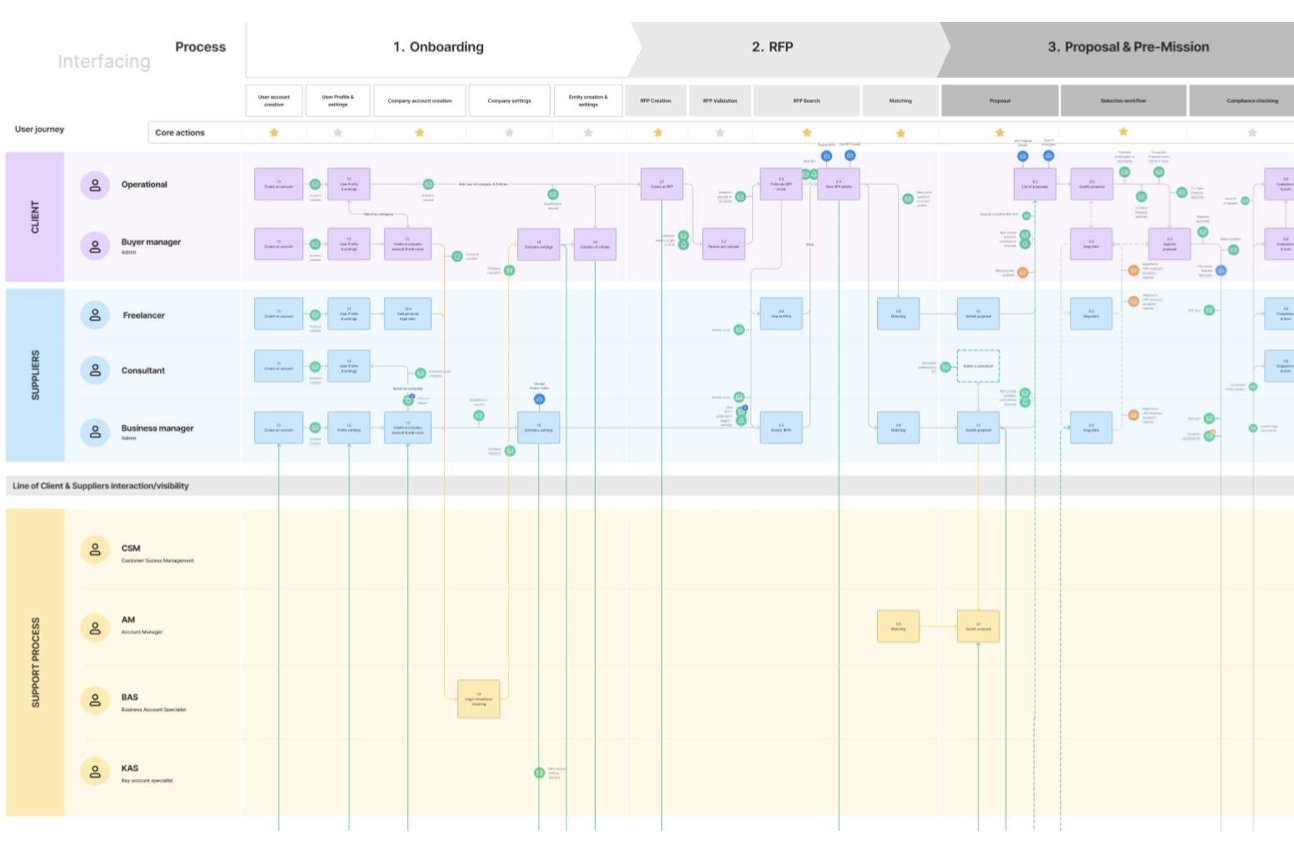
The platform — LittleBig Connection, a B2B marketplace for managing suppliers, RFPs and proposals — had a growing pile of support tickets along the lines of "I can't find where to do X," but no evidence of which parts of the navigation actually mattered to users.
My job was to instrument that invisible layer of the product: what people click, where they drop off, and what's missing for them to notice something needs their attention.
Hypothesis
I framed it as a testable hypothesis: the menu architecture didn't match the user's mental model — the actions the business labeled "core" weren't the ones users prioritized on login — and part of that gap came from the near-total absence of clear notifications. If true, CTR data should show heavy traffic on a narrow set of actions and almost none on anything tied to follow-up or status.
The data behind the problem
Using Pendo, I built a monthly click-through-rate ranking for every navigation item and cross-referenced it against client profile (operational vs. project manager). The pattern was consistent: people came in to find RFPs and create proposals, and everything related to follow-up and notifications stayed effectively invisible.
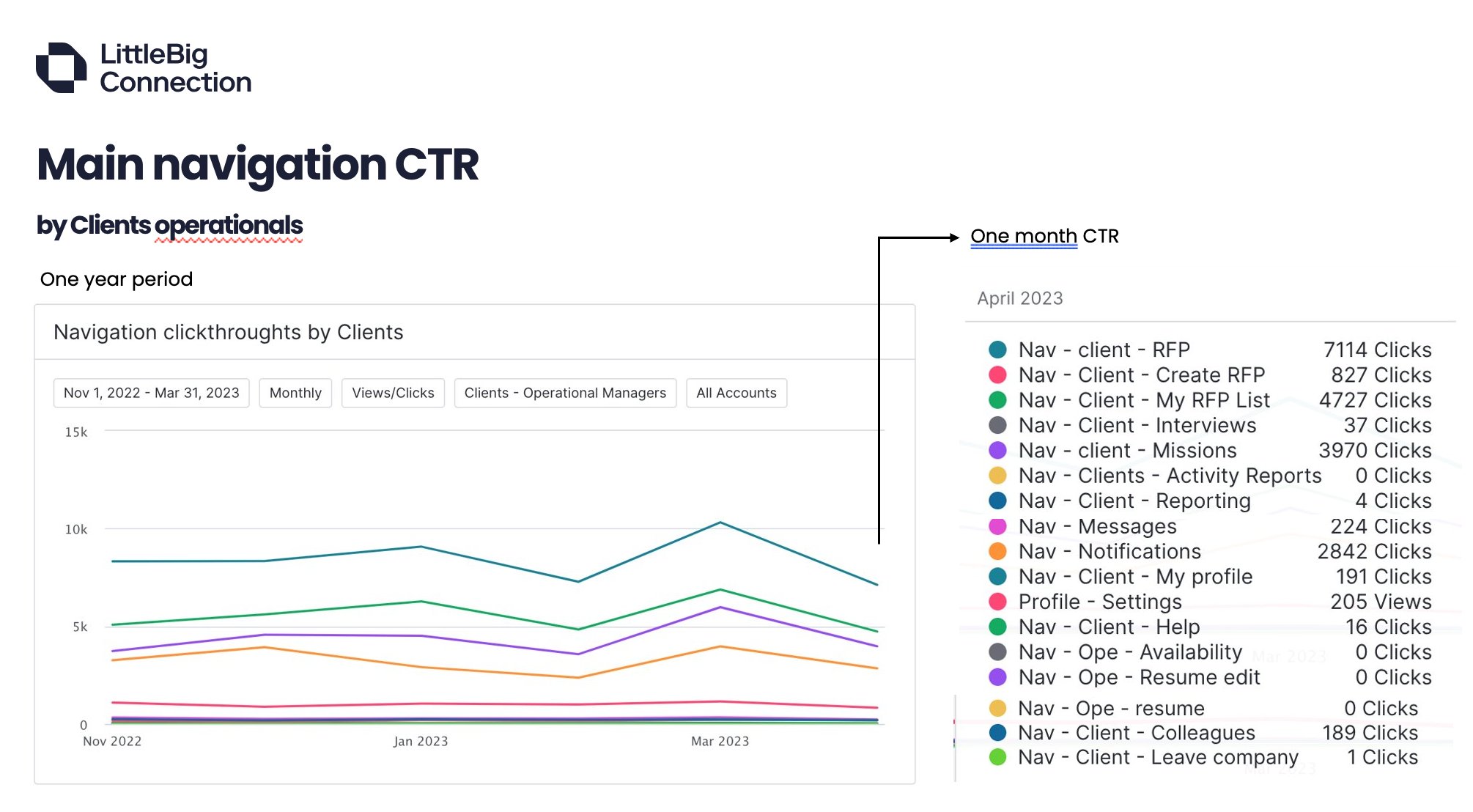
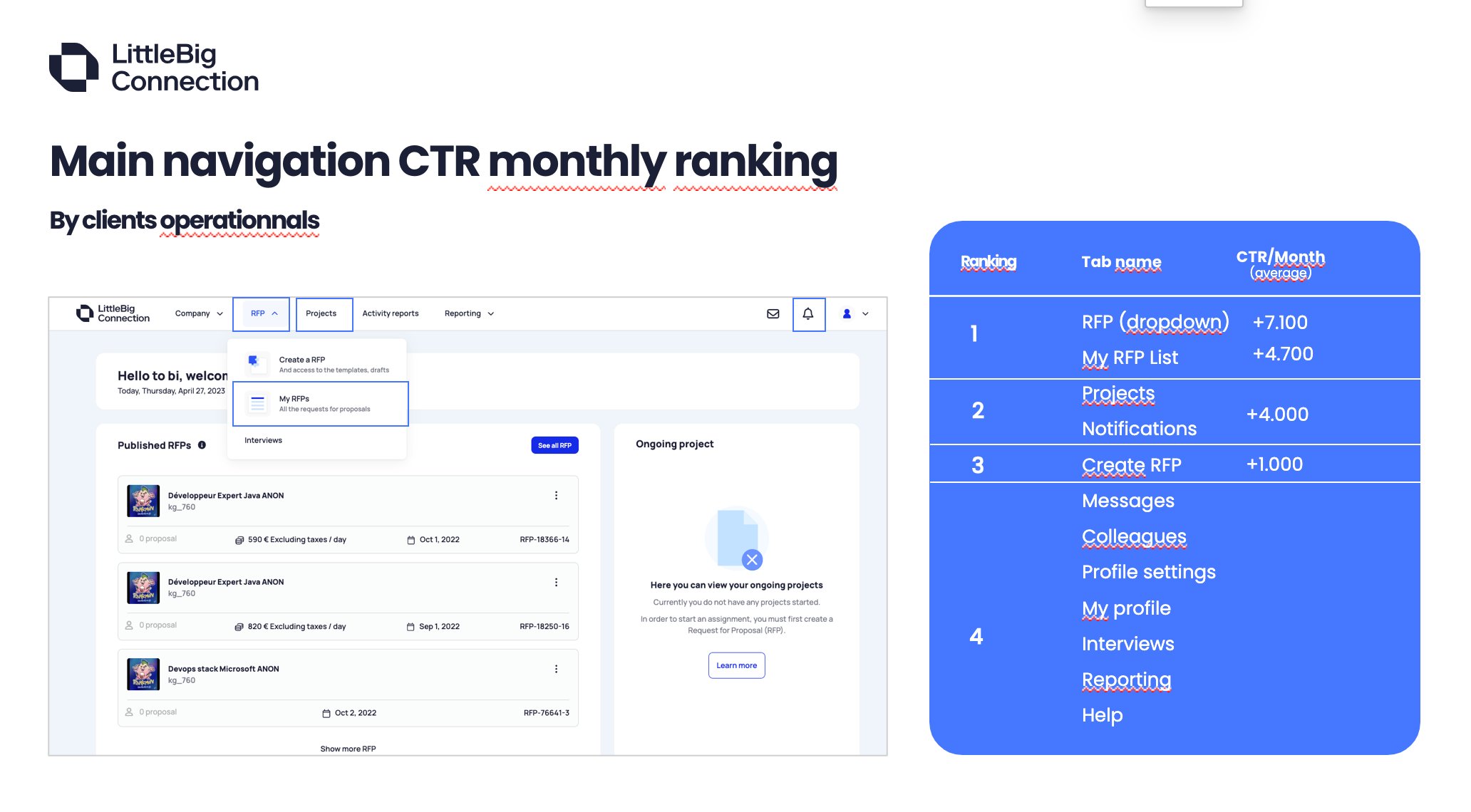
Discovery: the real problem was notifications
Low CTR on certain sections wasn't a problem with those sections — nobody knew there was anything pending there in the first place. No inventory existed of what notifications the platform sent, when they fired, or through which channel (in-app, email, toast). I led that full mapping effort across cross-functional teams.
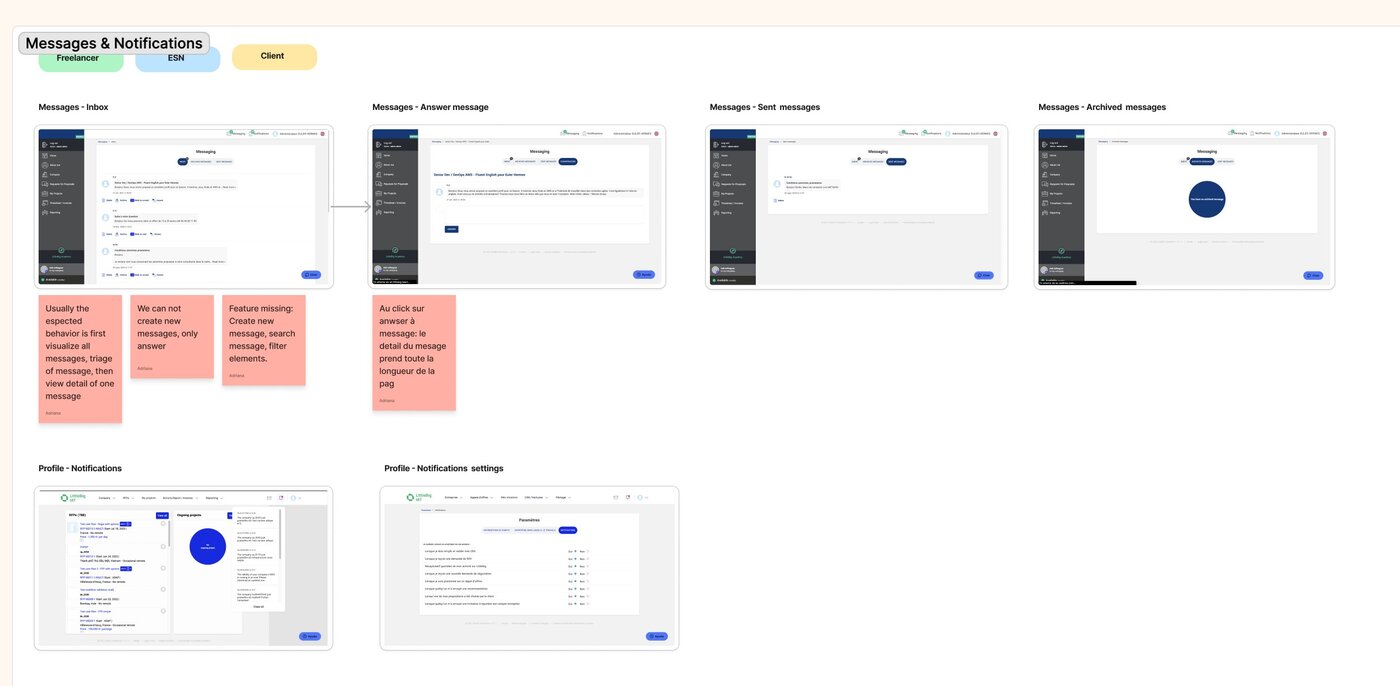
From inventory to framework
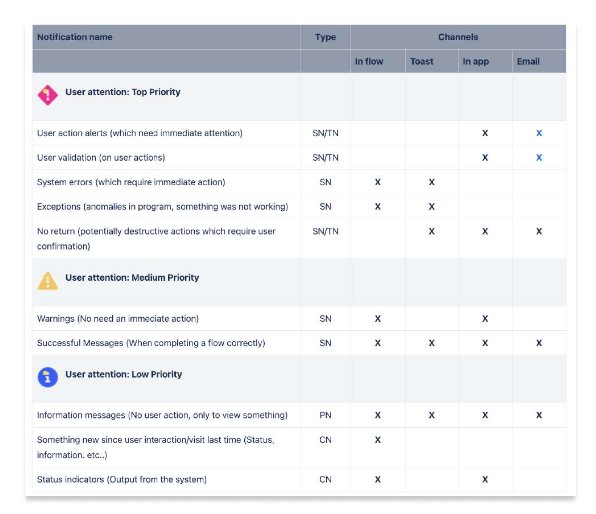
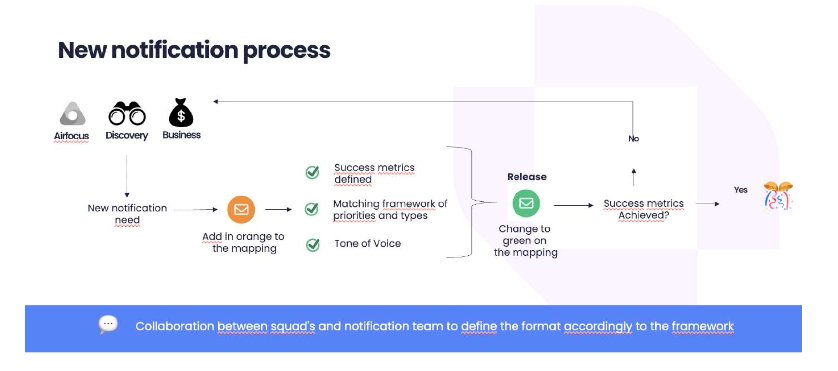
With the full inventory in hand, I designed a classification framework by urgency (top / medium / low priority) and channel. It became the reference product and engineering still use today to decide how any new notification should behave.
Result
After launching the new notifications and the action-first home, we measured directly against activity reports — one of the most critical flows and previously the most complained-about by support.